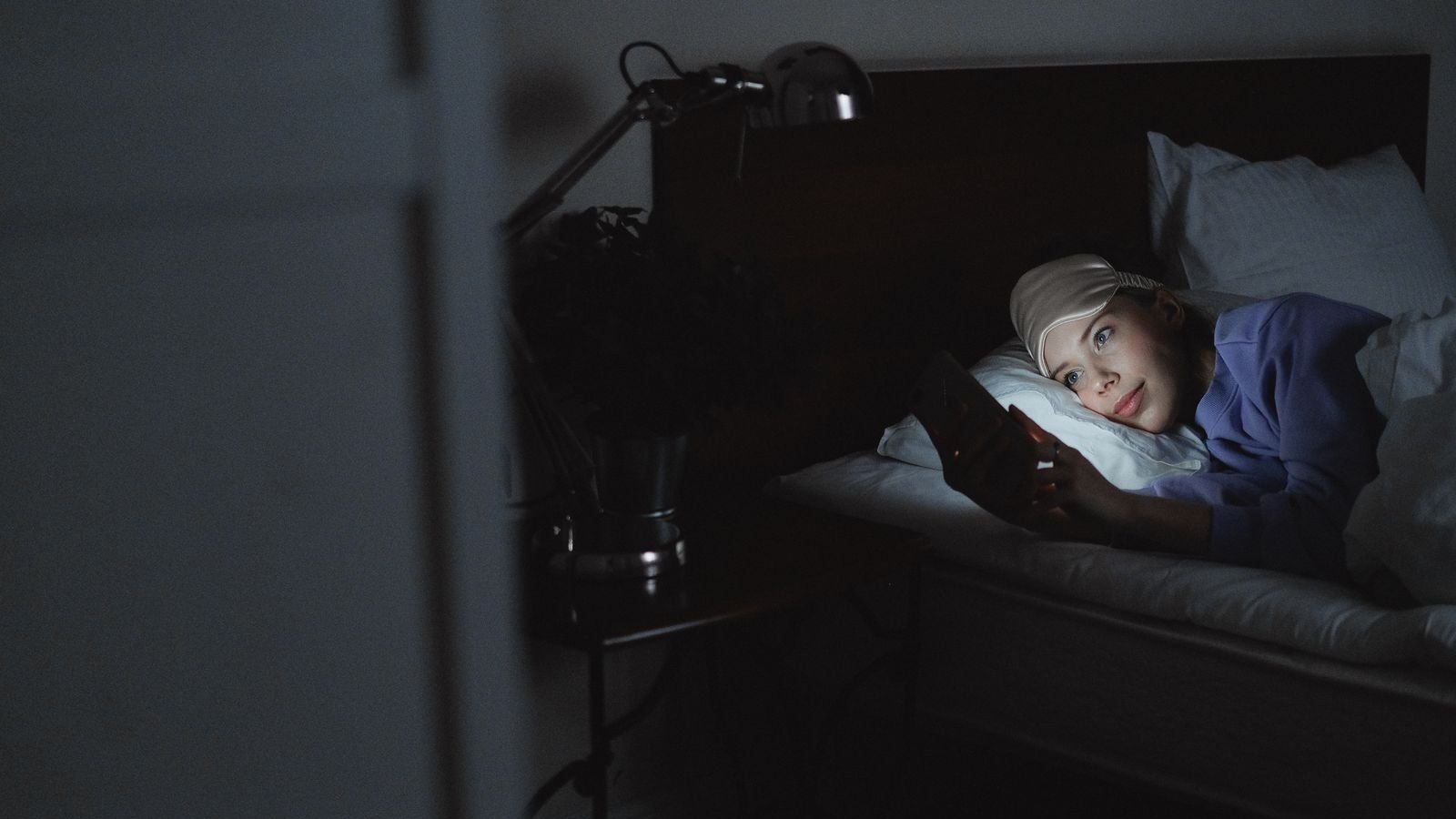
"One more scroll" before sleep rarely stays at one. What starts as a quick check of messages routinely turns into forty-five minutes of feed after feed, and the cost of that forty-five minutes shows up the next day as much as it does that night.
What's actually happening physically
Phone and tablet screens emit light heavily weighted toward the blue end of the spectrum, which suppresses melatonin production more than warmer light does. Melatonin is the signal your body uses to wind down toward sleep, and suppressing it in the hour before bed delays not just when you fall asleep, but the depth of the sleep you get once you do.
It's not just the light, it's the content
Even with blue light filters or night mode enabled, screen time before bed still disrupts sleep, because the content itself is stimulating. A social feed, an argument in the comments, a stressful news headline, all of these activate the same alertness response that makes it harder to wind down, independent of how much blue light is involved. Night mode helps, but it doesn't neutralize the effect of scrolling something engineered to hold your attention.
Why this specifically damages next-day focus
- Reduced deep sleep. Deep sleep stages are when the brain does much of its memory consolidation and cognitive recovery. Late-night screen use pushes bedtime later and cuts into these stages disproportionately.
- Fragmented sleep, not just less of it. Stimulating content before bed is linked to more nighttime waking, even if total hours asleep look roughly normal on paper.
- A worse starting point the next morning. Poor sleep directly reduces attention span and impulse control the following day, which, unhelpfully, makes you more likely to reach for the same late-night scrolling the next evening as a low-effort way to cope with the tiredness.
Breaking the cycle
- Set a specific cutoff time, not a vague intention. "I'll try to put my phone down earlier" rarely survives an actual evening. A specific time, say 45 minutes before your target sleep time, is something you can actually plan around.
- Block the apps most likely to pull you in, not the whole phone. You might still want an alarm or a sleep tracker. Blocking specifically the feeds and short-form video apps during that window removes the actual problem without cutting off useful tools.
- Keep your phone out of arm's reach overnight. A phone within reach gets checked during natural nighttime waking. One across the room usually doesn't.
- Replace the last 20 minutes with something low-stimulation. A physical book, stretching, or simply lying in the dark all work better than swapping one screen for another.
The payoff shows up the next afternoon
The clearest sign this is working usually isn't better sleep itself, it's the 3pm slump being noticeably smaller than it used to be. Protecting the last 45 minutes of your day tends to pay off in the middle of the next one.